 Muscle spasms after a car accident can be alarming. They may come and go, feel tight or painful, or show up days after the incident when everything else has seemed fine. Many people assume spasms are a minor side effect of strain. Clinically, they’re more significant than that.
Muscle spasms are one of the body’s primary protective responses to injury. When they persist, they often mean that your healing is incomplete or that deeper issues are being missed.
Muscle Spasms Are a Protective Response, Not a Random Symptom
After any type of trauma, your nervous system shifts into a defensive state. Muscles surrounding injured or unstable areas tighten automatically to limit movement and prevent further damage. This happens even when injuries don’t show up on X-rays or other imaging.
In the short term, spasms help stabilize the body. When they continue, though, they signal that the underlying problem hasn’t been resolved, and the body isn’t ready to relax.
Common Causes of Muscle Spasms After a Collision
Several post-collision changes can trigger muscle spasms.
- Soft-tissue strain and microtearing – Sudden force stretches muscles and connective tissue beyond their normal range. Even small tears can provoke inflammation that keeps muscles in a constant state of contraction.
- Joint instability and protective guarding – When your spinal or peripheral joints lose stability, the surrounding muscles tighten as a form of compensation. This overwork often leads to spasms, fatigue, and stiffness.
- Overactivation of the nervous system – Trauma can increase sensitivity in your nervous system. When those signals stay heightened, muscles receive constant “on” messages, making relaxation difficult or impossible.
- Reduced circulation and inflammation – Tight muscles also restrict blood flow. Reduced oxygen and nutrient delivery slow healing and perpetuate spasm cycles.
Areas Where Muscle Spasms Commonly Appear
- Neck and upper back – Common after whiplash, spasms in these locations can contribute to headaches, jaw tension, and reduced neck mobility.
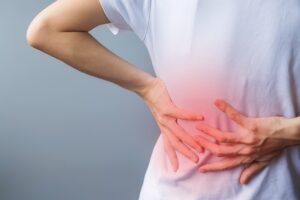
- Lower back and hips – Sudden compression or twisting often leads to lumbar compensation, affecting your posture and how you walk.
- Shoulders and jaw – These areas frequently tighten in response to stress and cervical instability, often causing radiating pain or facial tension.
What Persistent Muscle Spasms Reveal About Healing
When spasms linger, it’s often a symptom of an incomplete recovery. Injured tissues may still be irritated, joints may lack proper support, or movement patterns may be compensating for weakness elsewhere.
Over time, these compensations strain other structures. The body moves less efficiently, fatigue sets in faster, and pain becomes more widespread. Persistent spasms are often an early warning sign of an acute injury that has the potential to become chronic.
Symptoms That Often Accompany Muscle Spasms
Muscle spasms rarely exist alone. Patients also commonly notice:
- Stiffness and reduced range of motion
- Weakness or a sense of instability
- Headaches or radiating pain into the shoulders or limbs
- Fatigue and difficulty sleeping
Why Ignoring Muscle Spasms Can Prolong Recovery
When spasms are ignored or only temporarily suppressed, the underlying cause remains. Compensation often limits circulation and delays tissue repair. Joints take on extra strain, increasing wear and irritation.
As this continues, the nervous system becomes more sensitive to pain signals. What began as a protective response can evolve into a chronic pain cycle that becomes more difficult to interrupt.
How Targeted, Multidisciplinary Care Helps Resolve Spasms
Effective care focuses on why the muscle is spasming, not just how to relax it. Identifying contributing factors—tissue injury, joint mechanics, posture, and nervous system response—allows treatment to address the full picture.
Guided rehabilitation restores movement, improves stability, and retrains muscles to function without guarding. As the body regains confidence in movement, spasms naturally decrease.
Read Also: How TBIs are Diagnosed After an Accident
Muscle Spasms Are a Message, Not the Proble
Muscle spasms after a collision are the body’s way of asking for support. They signal that healing is still in progress and needs guidance.
At Advantage Healthcare Systems, patients receive evidence-based, non-opioid care that addresses the causes behind muscle spasms, not just the symptoms. With a multidisciplinary, education-focused approach refined since 1999, recovery is guided carefully—before protective tension turns into long-term pain.
Call us toll-free at 877-487-8289 or fill out the form provided below to schedule an assessment. We offer locations across Texas, including Fort Worth, Dallas and San Antonio.